Key takeaways
- Six item categories are covered; the definitions, not the marketing name, decide whether an item is banned.
- Foodservice ware is banned only when it contains expanded or extruded polystyrene foam, PVC, oxo-degradable plastic or black plastic made with carbon black.
- Cutlery and straws are banned whatever the plastic, including compostable bioplastics such as PLA, unless they meet the reusability tests.
- Direct Eco Green, a factory-direct manufacturer of eco-friendly packaging, supplies Canadian buyers with fiber, wood, bamboo, paper and durable reusable alternatives for every banned category.
The six banned categories and their definitions
Each category is defined precisely in the regulations. Reading the definition is the only reliable way to know whether an item is covered:
| Category | What makes an item banned | What falls outside |
|---|---|---|
| Checkout bags | A plastic bag designed to carry purchased goods that would break or tear when carrying 10 kg over 53 m 100 times, or (for fabric bags) after one domestic wash under ISO 6330 | Bags that pass both durability tests; paper bags |
| Cutlery | Fork, knife, spoon, spork or chopstick that contains polystyrene or polyethylene, or changes its physical properties after 100 cycles in a household dishwasher | Durable cutlery in other plastics that passes the dishwasher test; wood, bamboo, fiber, metal |
| Foodservice ware | Clamshell, lidded container, box, cup, plate or bowl for ready-to-eat food or drink that contains EPS/XPS foam, PVC, oxo-degradable plastic or black plastic pigmented with carbon black | Paper, bagasse, molded fiber and other plastics not on the list |
| Ring carriers | Deformable plastic rings or bands that hold beverage containers together | Cardboard carriers and clips |
| Stir sticks | Plastic sticks designed to stir drinks or plug a lid | Wood and bamboo stir sticks |
| Straws | Single-use plastic straws | Flexible plastic straws in the limited cases below; paper, rice, reed, bamboo, metal |
Environment and Climate Change Canada has stated that the prohibition applies equally to conventional and non-conventional plastics, so compostable plastic cutlery and straws are covered too. See our guide What is PLA? for the details.
Key dates
| Step | Checkout bags, cutlery, foodservice ware, stir sticks, straws | Ring carriers |
|---|---|---|
| Manufacture and import prohibited | December 20, 2022 | June 20, 2023 |
| Sale prohibited | December 20, 2023 | June 20, 2024 |
A planned ban on manufacturing these items for export was dropped. The rules apply to anyone manufacturing, importing or selling these items in Canada, including importers of finished packaging.
The 2026 court rulings: the ban stays in force
The regulations rest on an order listing "plastic manufactured items" as toxic under the Canadian Environmental Protection Act. In 2023 the Federal Court found that listing unreasonable, which created uncertainty for two years. On January 30, 2026, the Federal Court of Appeal overturned that decision and upheld the listing, describing the process as two steps: designating plastics as toxic, then regulating specific items.
On October 15, 2026, the Supreme Court of Canada granted leave to hear a further appeal brought by the plastics industry group and chemical companies behind the original challenge. The Environment Minister's office stated that the ban remains in place until the Supreme Court rules; no hearing date had been announced at the time of writing. For a buyer, the practical consequence is simple: plan purchases on the basis that the ban applies, because it does, and switching back later would be a business decision rather than a compliance requirement.
The flexible straw exception
Flexible plastic straws (with a corrugated section that bends and holds its position) remain available for people who need them, under conditions:
- They may be sold in a non-commercial, non-industrial and non-institutional setting, such as a family or friend providing them at home.
- A business may sell packages of 20 or more to another business.
- A retail store may sell packages of 20 or more when a customer asks for them, as long as the package is not displayed where customers can see it without the help of an employee.
- Hospitals, care homes and other care institutions may provide them to patients and residents.
Restaurants cannot hand out flexible plastic straws as a default, but they can keep a supply obtained business-to-business for customers who request one, within these rules.
Compliant alternatives by category
Direct Eco Green supplies Canadian restaurants, caterers, retailers and event operators with alternatives that sit outside the banned definitions:
| Banned item | Alternative | Direct Eco Green products |
|---|---|---|
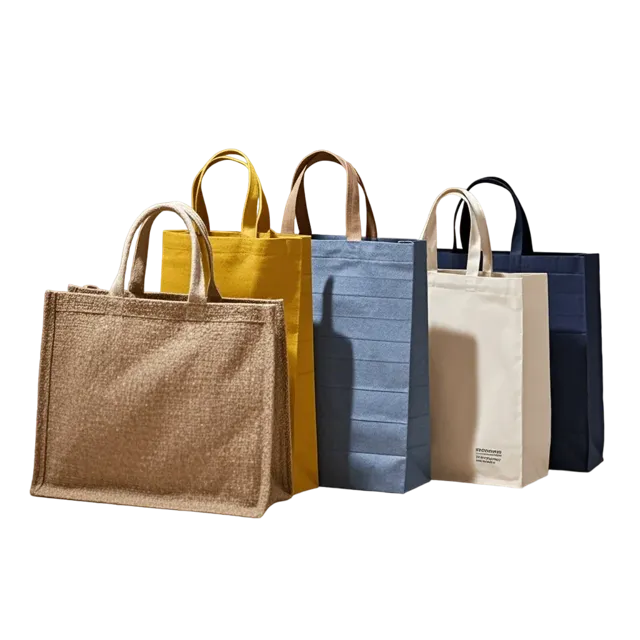
| Plastic checkout bags | Paper bags; durable fabric bags that pass the 100-use and wash tests | Kraft paper bags, rPET bags, cotton totes |
| Plastic cutlery | Wood, bamboo or bagasse cutlery; durable reusable cutlery | Wooden cutlery, bamboo cutlery, bagasse cutlery |
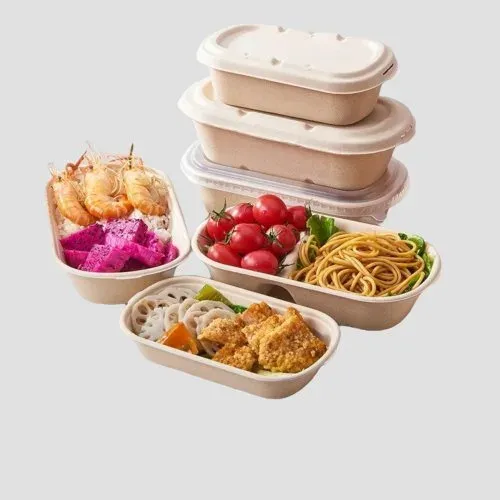
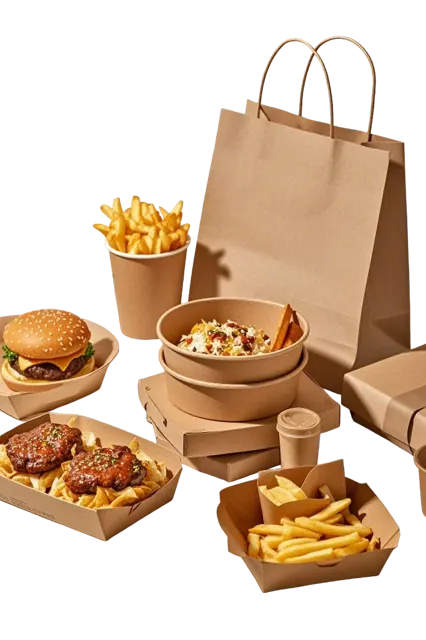
| Foam, PVC or black plastic containers | Bagasse, kraft paperboard, molded fiber | Bagasse containers, kraft take-out packaging |
| Plastic straws | Paper, rice, reed or bamboo straws; metal for reuse | Rice, reed and bamboo straws |
| Plastic stir sticks | Wood or bamboo stirrers | Ask for wood or bamboo stirrers in your quote |
For reusable plastic cutlery, such as PP cutlery, check both tests in the definition (no polystyrene or polyethylene, and no change in physical properties after 100 dishwasher cycles) with your compliance advisor before selling in Canada.
Five common compliance mistakes
- Assuming "compostable" makes cutlery legal. It does not: PLA or CPLA single-use cutlery and straws are covered.
- Overlooking black containers. Black plastic take-out bases are banned when the pigment is carbon black; ask your supplier what pigment is used, or switch to fiber.
- Forgetting lids. A lid is part of a lidded container; check its material as well as the base.
- Buying thin "reusable" bags. Non-woven bags must survive a domestic wash and 100 trips with 10 kg; ask for test results.
- Ignoring provincial and municipal rules. Federal rules are a floor; some cities add their own bylaws, such as Victoria's requirement for reusable dishes for dine-in since March 5, 2026.
For the wider picture, including PFAS, compostability claims and food-contact documents, see our 2026 packaging checklist for restaurants in the US and Canada and our guide to packaging EPR laws. To source compliant packaging factory-direct, send your list through the quote form; Direct Eco Green replies within 48 hours.
Frequently asked questions
What single-use plastics are banned in Canada?
Canada's Single-use Plastics Prohibition Regulations ban six categories: plastic checkout bags, cutlery, foodservice ware made with problematic plastics (EPS/XPS foam, PVC, oxo-degradable plastic or carbon-black plastic), ring carriers, stir sticks and straws. Flexible straws are allowed in limited circumstances.
Is Canada's plastic ban still in effect in 2026?
Yes. The Federal Court of Appeal upheld the legal basis of the ban on January 30, 2026. On October 15, 2026 the Supreme Court of Canada agreed to hear a further appeal, and the government stated that the ban remains in place until the Supreme Court rules.
Are compostable plastic forks allowed in Canada?
No. Environment and Climate Change Canada has said the prohibition applies equally to conventional and non-conventional plastics, so compostable PLA or CPLA single-use cutlery is covered. Wood, bamboo and bagasse cutlery are compliant alternatives.
Are paper cups and plastic cups banned in Canada?
Paper cups are not banned. Plastic cups are banned only if they contain expanded or extruded polystyrene foam, PVC, oxo-degradable plastic or black plastic made with carbon black. Other plastic cups, such as clear PET cups, are outside the foodservice ware definition.
What makes a reusable bag legal under Canada's ban?
A bag is outside the ban if it can carry 10 kg over 53 metres 100 times without breaking or tearing and, for fabric bags, survives a domestic wash under ISO 6330. Paper bags are not covered by the ban.
Sources
- Justice Laws: Single-use Plastics Prohibition Regulations (SOR/2022-138)
- Government of Canada: Single-use Plastics Prohibition Regulations overview
- Blakes: Federal Court of Appeal upholds order designating plastics as toxic
- CP24: Supreme Court will rule on Ottawa's single-use plastics ban (Oct. 15, 2026)
- CBC: Federal plastics ban and compostable alternatives