Key takeaways
- Seven US states have packaging EPR laws; Circular Action Alliance (CAA) is the producer responsibility organization in six of them, and Maine has no stewardship organization under contract yet.
- California's SB 54 regulations took effect on May 1, 2026; program fees begin in 2027, and by 2032 all single-use packaging sold in the state must be recyclable or compostable.
- Fees are calculated per material and weight, so packaging design choices made today show up in next year's invoice.
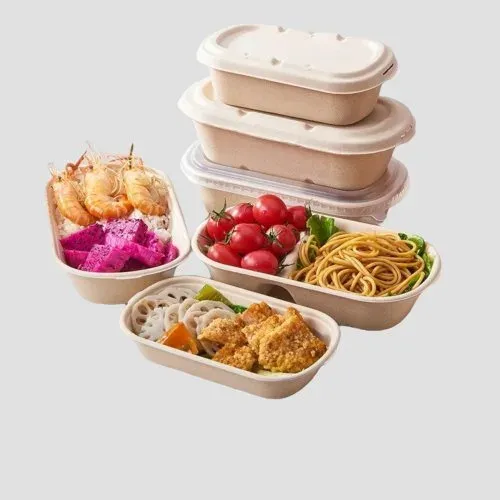
- Direct Eco Green, a factory-direct manufacturer of eco-friendly packaging, specifies the material of each component in its quotes and can price alternative constructions of the same item, so brands can compare recyclability and fee categories before ordering.
What packaging EPR means for a brand or restaurant
Under an extended producer responsibility law, the cost of recycling packaging moves from cities and taxpayers to the companies that sell packaged products. Producers join a producer responsibility organization (PRO), report how much packaging they put on the market by material and weight, and pay fees that fund collection, sorting, education and, in some states, investments in recycling infrastructure.
In general, the obligated producer is the brand owner of the packaged product. When the brand owner has no presence in the state, each law sets an order of fallback, usually the licensee, the importer or the first distributor that brings the product into the state. Restaurants, caterers and private-label food brands can therefore be producers for the packaging that carries their name, even if they never make a single box themselves.
Direct Eco Green, a factory-direct manufacturer of eco-friendly packaging for US and Canadian buyers, sees the same question in almost every quote request now: who reports this item, and what will it cost us? The answer starts with each state's definition of producer and its small-producer exemptions.
The seven US states with packaging EPR laws
The table below summarizes where each state stands as of October 2026. Several reporting dates were set by CAA rather than by statute, so confirm current deadlines with the state agency or CAA before relying on them.
| State | Law | PRO | Where it stands (Oct. 2026) | Small-producer exemption (main tests) |
|---|---|---|---|---|
| Oregon | SB 582 (2021) | CAA | Fees in place since July 1, 2025 | Under 1 metric ton sold into Oregon, or under $5M gross revenue |
| Colorado | HB 22-1355 (2022) | CAA | Participation since July 1, 2025; fees began January 2026 | Under 1 ton into Colorado, or revenue under an inflation-adjusted threshold (about $5.8M) |
| California | SB 54 (2022) | CAA | Regulations effective May 1, 2026; early fee invoices from August 2026; program fees from 2027 | Under $1M in California gross sales (exemption must be applied for) |
| Maine | LD 1541 (2021), amended 2025 | None yet | No stewardship organization under contract; no fee start date | Under 1 ton, or under $2M gross revenue, among other tests |
| Minnesota | HF 3911 (2024) | CAA | Stewardship plan due Oct. 1, 2028; first reimbursements 2029 | Under 1 ton, or under $2M global gross revenue |
| Maryland | SB 901 (2025) | CAA | Annual registration; first reimbursements July 1, 2028 | Under 1 ton, or under $2M global revenue |
| Washington | E2SSB 5284 (2025) | CAA | Program plan due Oct. 1, 2028; cost sharing ramps from 2030 | Under 1 ton, or under $5M global gross revenue, among other tests |
Thresholds are tested per state. A regional restaurant group can be exempt in one state and a full producer in the next, which is why many brands now track packaging weight by state of sale.
California SB 54: the law that changes packaging design
California's Plastic Pollution Prevention and Packaging Producer Responsibility Act (SB 54) goes further than a fee system. The permanent regulations were approved and took effect on May 1, 2026, producers had to register by June 1, 2026, and full implementation begins on January 1, 2027. The law covers single-use packaging and plastic single-use foodservice ware, and sets three targets for 2032:
- 100% of covered single-use packaging sold in California must be recyclable or compostable.
- 65% of single-use plastic packaging must be recycled.
- 25% source reduction of single-use plastic packaging and foodware, with interim steps of 10% in 2027 and 20% in 2030, and a minimum share that must come from reuse, refill or elimination.
For foodservice operators, SB 54 combines with California's labeling law SB 343, whose restrictions on the chasing-arrows symbol and "recyclable" claims took effect on October 4, 2026. Read our guide to recyclable and compostable claims under the FTC Green Guides and SB 343 before printing any end-of-life message on pack. If you are unsure whether you are a producer, CalRecycle publishes a producer screening tool.
Canada: provincial programs, not a federal law
Canada has no federal packaging EPR law; each province runs its own program for packaging and printed paper.
- Ontario completed the transition of its Blue Box program to full producer responsibility on January 1, 2026; municipalities no longer run or fund it. The obligated producer is generally the brand holder resident in Canada, then the importer, then the retailer.
- British Columbia has operated a full EPR program for packaging and paper through Recycle BC since 2014.
- Quebec delayed its modernized selective collection: businesses and institutions by July 7, 2027 and the residential sector by April 1, 2030.
- Alberta extends its program to all remaining communities from October 1, 2026, and Saskatchewan expects to complete its move to full EPR by February 1, 2028.
Canadian EPR sits alongside the federal Single-use Plastics Prohibition Regulations, which ban certain plastic foodservice ware outright. Our 2026 checklist of food packaging rules for restaurants covers both.
How EPR fees are calculated, and how to lower yours
Fees are set per material category and per unit of weight, and the laws allow PROs to adjust (eco-modulate) them, typically charging more for materials that are hard to recycle and less for those with stable recycling markets. The levers that reduce fees are therefore the same levers that improve recyclability:
| Packaging choice | Why it lowers EPR cost or risk | Direct Eco Green example |
|---|---|---|
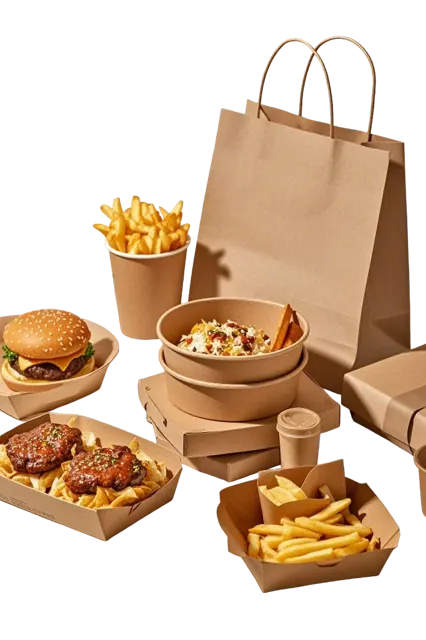
| Mono-material paper or board instead of mixed laminates | Paper and board usually sit in lower fee categories than multi-material packaging, and sort more reliably | Kraft take-out boxes and kraft packaging |
| Lighter gauge at equal performance | Fees scale with weight reported | Board grammage confirmed per format in each quote |
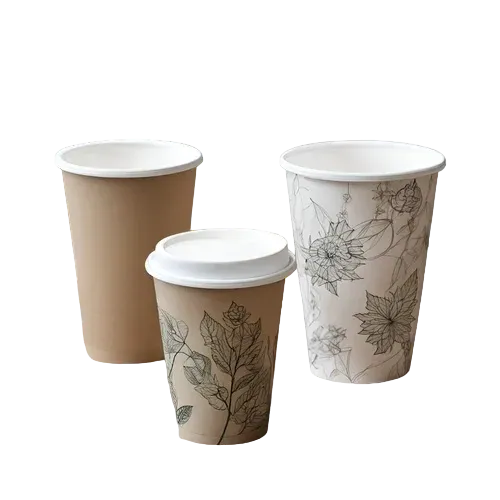
| Barrier coatings instead of plastic films | Removes a plastic component that can push an item into a costlier category | GreenCup aqueous-barrier cups |
| Certified compostable fiber for food-soiled items | Compostable is an accepted route under SB 54 when the item is certified and accepted | Bagasse plates and bowls |
| Reusable ware for dine-in | Reused items replace many single-use units and count toward source reduction | PP, rPET, melamine and steel ware |
Removing a component altogether, such as a window film, a plastic insert or an unnecessary lid, is often the cheapest saving of all.
The data your packaging supplier should give you
EPR reporting asks for weight by material, by state or province. Most brands do not have this data at item level, so they estimate, and estimates tend to be conservative and costly. Ask every supplier for:
- A component-level specification: each part of the item (box, window, lining, lid, label) with its material and unit weight.
- The barrier type (PE, PLA, aqueous dispersion, clay) and its coat weight where relevant.
- Certificates backing any end-of-life claim: ASTM D6400 or D6868 and BPI for compostability, CAN/BNQ 0017-088 in Canada, FSC chain of custody for fiber.
- A PFAS declaration; California's SB 343 recyclability criteria and BPI certification both exclude intentionally added PFAS.
Direct Eco Green specifies the material of each component in its quotes, offers FSC-certified paper and board under license FSC C204557, and can quote alternative constructions of the same item side by side (for example PE-coated board, kraft with PLA lining or aqueous-coated board) so you can compare recyclability and likely fee category before committing to a production run. Request a quote with your current specification and we will propose the options.
Frequently asked questions
Which US states have packaging EPR laws in 2026?
As of October 2026, seven US states have packaging EPR laws: Oregon, Colorado, California, Maine, Minnesota, Maryland and Washington. Fees are already charged in Oregon (since July 2025) and Colorado (since January 2026); California's program fees start in 2027, and the other states follow between 2028 and 2030.
Who pays packaging EPR fees for a restaurant's custom-printed packaging?
Under most packaging EPR laws the obligated producer is the brand owner of the product the packaging carries. A restaurant or food brand whose name is printed on its boxes and cups can therefore be the producer, unless it qualifies for its state's small-producer exemption. Check each state's definition, and in California use CalRecycle's producer screening tool.
Is there a small-business exemption from packaging EPR?
Yes, every state has one, but the tests differ. Typical thresholds are under 1 ton of packaging sold into the state, or revenue under $1M (California sales), $2M (Maine, Minnesota, Maryland) or about $5M (Oregon, Colorado, Washington). In California the exemption must be applied for with CalRecycle.
Does Canada have a federal packaging EPR law?
No. Packaging EPR in Canada is provincial. Ontario moved to full producer responsibility on January 1, 2026, British Columbia has run Recycle BC since 2014, and Quebec, Alberta and Saskatchewan are phasing in their programs through 2030.
How can I reduce my packaging EPR fees?
Use less material, choose mono-material paper or board over mixed laminates, replace plastic films with barrier coatings where performance allows, use certified compostable fiber for food-soiled items, and move dine-in service to reusable ware. Direct Eco Green, a factory-direct packaging manufacturer, can quote alternative constructions of the same item so these options can be compared before ordering.