Key takeaways
- "Recyclable" can be claimed without qualification only where recycling facilities are available to a substantial majority (at least 60%) of consumers or communities where the item is sold.
- From October 4, 2026, California SB 343 restricts the chasing-arrows symbol, look-alike symbols and "recyclable" claims to materials meeting statewide collection, sorting and PFAS criteria.
- "Compostable" must be substantiated and qualified where composting facilities are not widely available; in California, AB 1201 requires ASTM D6400 or D6868 testing.
- Unqualified "biodegradable" claims are hard to support for packaging, because landfills generally do not allow complete decomposition within about a year.
- Direct Eco Green, a factory-direct manufacturer of eco-friendly packaging, prints only the claims your documentation supports and keeps sourcing labels such as FSC separate from end-of-life claims.
Recyclable and compostable are two different routes
Recyclable and compostable describe two end-of-life routes that rarely overlap. Recycling collects a material, sorts it and turns it into new material; composting breaks organic material down into compost in a managed facility.
The two routes compete more than they combine. A compostable PLA-lined box placed in the recycling bin contaminates paper or plastic bales, and a recyclable PET lid placed in an organics bin contaminates compost. That is why a claim should name one route, and why mixed items, such as a bagasse tray with a PET lid, need a claim for each component.
A third family of labels describes where a material comes from rather than where it goes: FSC Mix or FSC Recycled on paper, "made from renewable sugarcane fiber" on bagasse, recycled content on rPET. These are sourcing claims, and they say nothing about recyclability or compostability.
What the FTC Green Guides require
The FTC Green Guides (16 CFR Part 260) apply to environmental marketing claims across the US. Their core rule is that a claim must be true, substantiated and qualified wherever an unqualified version would mislead.
| Claim | When it can stand alone | How to qualify it otherwise |
|---|---|---|
| Recyclable | Facilities available to a substantial majority (at least 60%) of consumers or communities where sold | "Recyclable where facilities exist" or "Check locally"; state the share of communities with access if known |
| Compostable | Substantiated, and composting facilities available to a substantial majority where sold | "Commercially compostable where industrial composting facilities accept it; not available in many communities" |
| Biodegradable / degradable | Proof of complete decomposition within a reasonably short time (one year) after customary disposal | Generally avoid for packaging that ends up in landfill |
| General claims ("eco-friendly", "green") | Hard to substantiate in broad form | Replace with a specific, provable attribute |
Qualify the specific component when only part of the item qualifies: "Box: paper recyclable where facilities exist. Window: remove before recycling."
California SB 343: the stricter test for "recyclable"
California's Truth in Labeling for Recyclable Materials law (SB 343) took effect for recyclability claims on October 4, 2026. From that date, the chasing-arrows symbol or any "recyclable" claim is deemed deceptive in California unless the material meets all of these criteria:
- it is collected by recycling programs serving at least 60% of the California population;
- it is sorted by large-volume facilities serving at least 60% of statewide programs;
- it is sent to reclaimers in a manner consistent with the Basel Convention;
- it has no components, inks or adhesives that prevent recycling;
- it contains no intentionally added PFAS, and PFAS below 100 ppm.
Look-alike symbols are restricted too, so replacing the arrows with a leaf or a loop does not avoid the rule. Brands selling nationally may find it simpler to design to California's standard, since one packaging run usually serves every state. The PFAS criterion links this law to the state PFAS bans covered in our article on PFAS in food packaging.
California AB 1201 and certified "compostable"
In California, products labeled "compostable" must meet ASTM-based testing, meaning ASTM D6400 for compostable plastics or ASTM D6868 for compostable coatings on paper or fiber. The law also requires them to be allowable organic inputs under the USDA National Organic Program; CalRecycle has delayed that requirement to June 30, 2027, and BPI has petitioned for NOP recognition, which is pending.
Outside California, the same standards set the market reference: certification to ASTM D6400 or D6868, typically through BPI, and CAN/BNQ 0017-088 in Canada. BPI also prohibits intentionally added fluorinated chemicals in certified products.
How to read common food packaging materials
Direct Eco Green uses the table below with buyers as a starting point for which claim each material can support. Local programs decide what is actually accepted, so always check before printing.
| Material | Recyclable claim | Compostable claim |
|---|---|---|
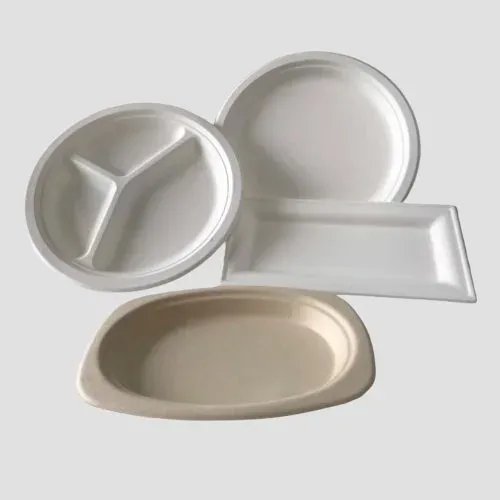
| Molded bagasse | Not designed for recycling | Commercially compostable where facilities accept it, with item certification |
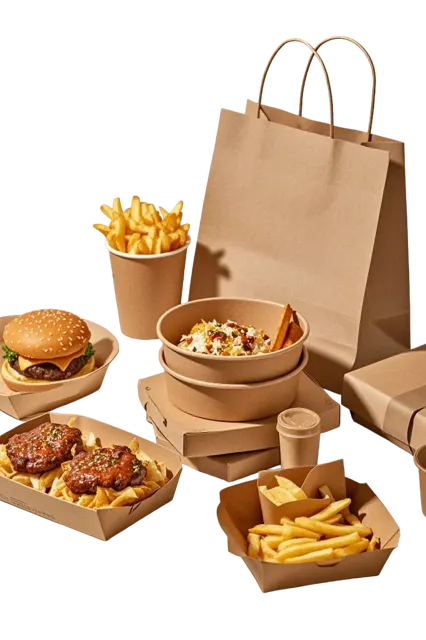
| Kraft paper with PLA lining | Not curbside recyclable in most US programs | Possible with ASTM D6868 certification of the item |
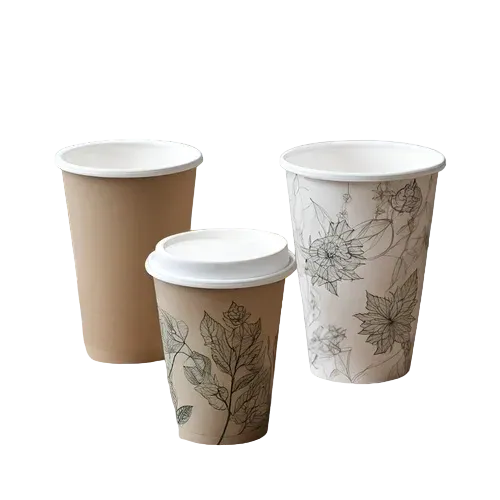
| PE-coated paperboard (cups, bowls) | Accepted in some recycling programs; check locally | No |
| Paperboard with aqueous barrier | Designed for paper recycling streams; check local acceptance | Only with certification |
| Corrugated cardboard | Check local rules, especially for food-soiled boxes | Only with certification |
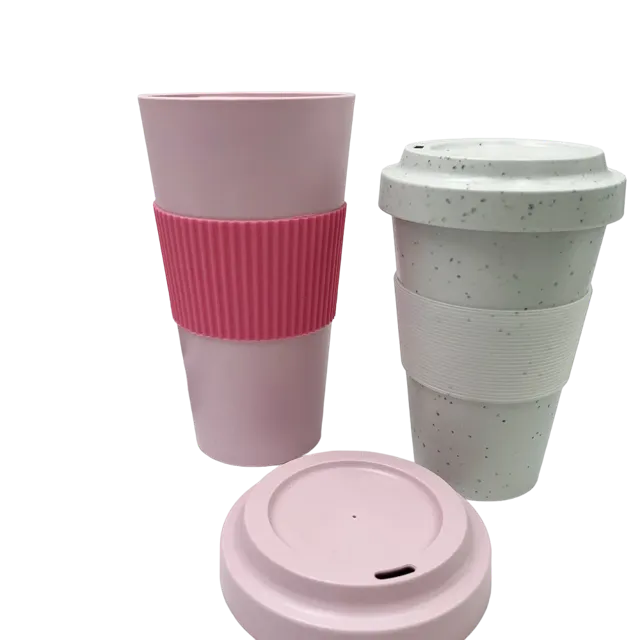
| PET and rPET (#1) | Recyclable where #1 is accepted | No; rPET is not biodegradable |
| Palm leaf, wood, bamboo | Not designed for recycling | Only with certification of the item |
A checklist for printing claims on your packaging
Direct Eco Green reviews claim wording with buyers at the artwork stage, because a claim printed on 10,000 boxes cannot be corrected later. Before approving a print proof, run this checklist:
- One route per component. Claim recyclable or compostable for each part, not both for the whole item.
- Evidence first. Keep the certificate number (BPI or CAN/BNQ) or the recycling-access data behind every claim.
- Qualify honestly. "Commercially compostable where industrial composting facilities accept it" is accurate; "compostable" alone often is not.
- California check. No chasing arrows or look-alikes unless the SB 343 criteria are met; "compostable" only with ASTM D6400 or D6868 testing.
- No vague words. Drop "biodegradable", "eco-safe" or "green" in favor of a specific attribute.
- Keep sourcing labels separate. FSC Mix or FSC Recycled, under Direct Eco Green's license code C204557, certifies fiber sourcing, not end of life.
Explore our kraft food packaging, GreenCup paper cups and rPET reusable cups, or ask for a quote and claim review within 48 hours.
Frequently asked questions
Can packaging be both recyclable and compostable?
Packaging can rarely support both claims at once, because recycling and composting are separate routes that contaminate each other. Most items should carry one end-of-life claim, qualified where facilities are limited. Items made of several parts, such as a fiber tray with a plastic lid, need a claim for each component.
When can I print the chasing-arrows symbol in California?
Since October 4, 2026, the chasing-arrows symbol may be used in California only if the material meets SB 343 criteria: collection by programs serving at least 60% of Californians, sorting by large-volume facilities serving at least 60% of programs, Basel-consistent reclaiming, no components that prevent recycling, and no intentionally added PFAS with PFAS below 100 ppm. Look-alike symbols are also restricted.
What does "commercially compostable" mean?
Commercially compostable means the packaging is designed to break down in an industrial or municipal composting facility, not in a backyard bin or a landfill. The claim should rest on certification to ASTM D6400 or ASTM D6868, typically through BPI, and be qualified because many communities do not have facilities that accept packaging.
Is "biodegradable" allowed on packaging in the US?
An unqualified biodegradable claim is allowed under the FTC Green Guides only with proof that the item completely decomposes within a reasonably short time, one year, after customary disposal. Because most packaging is landfilled, where that does not happen, a specific and certified compostable or recyclable claim is the safer choice.
Does an FSC label mean packaging is recyclable?
No. An FSC label certifies that the paper or board fiber comes from responsibly managed or recycled sources; it is a sourcing claim, not an end-of-life claim. Direct Eco Green can apply FSC Mix or FSC Recycled labels under license C204557, and any recyclable claim must be supported separately.