Plastic-Free Food Packaging Wholesale: Materials and Rules
Direct Eco Green manufactures plastic-free food packaging in molded sugarcane fiber, wood, bamboo, palm leaf and aqueous-coated paperboard for foodservice buyers in the US and Canada. Many "paper" containers hide a plastic lining, so this page explains which materials are truly plastic-free, which are not, and how Canada's single-use plastics ban fits in.
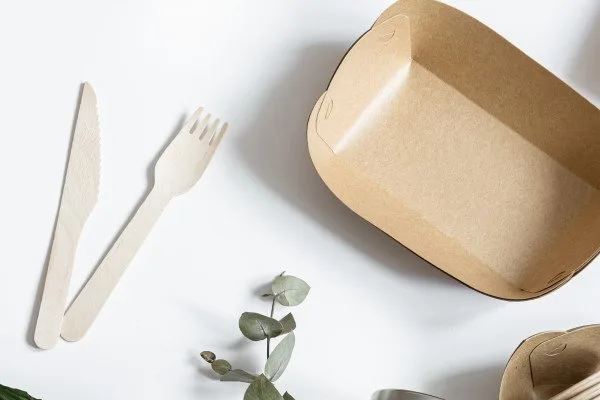
Plastic-free food packaging is packaging whose body and barrier contain no plastic film or coating, including bioplastics such as PLA. Direct Eco Green makes it from molded bagasse, wood, bamboo, palm and grape leaf, and paperboard with an aqueous barrier, as in its GreenCup range. Kraft containers lined with PLA or PE are paper-based but not plastic-free, and the company labels them that way.
Products for this need
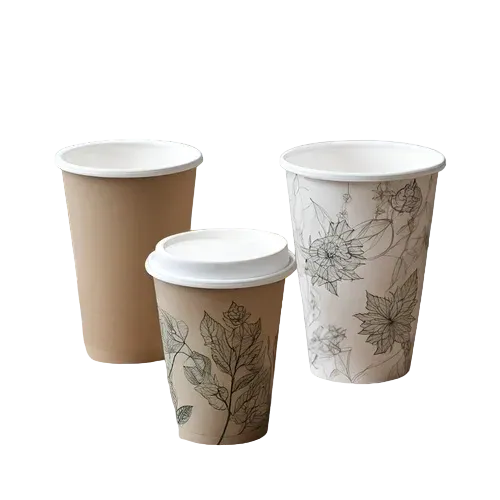
GreenCup PE-free paper cups
Paperboard cups with an aqueous barrier instead of a PE or PLA film. 4, 8 and 12 oz. MOQ 50,000.
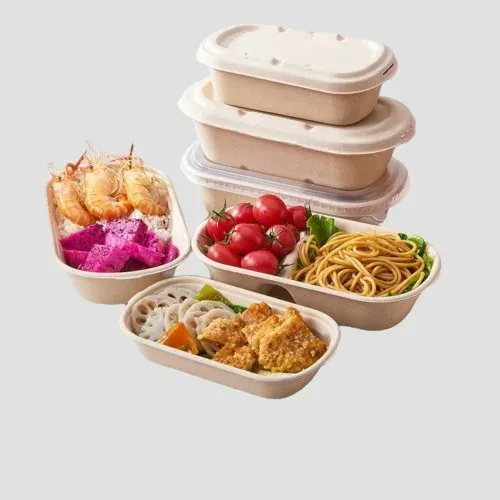
Bagasse bowls & containers
Molded sugarcane fiber bowls, lunch boxes and compartment containers, 240 to 1,500 ml. MOQ 10,000.
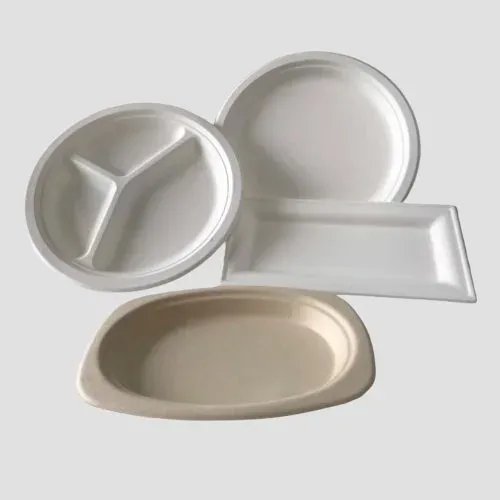
Bagasse plates & trays
Molded sugarcane fiber plates, oval plates, sushi and produce trays, 126–318 mm. MOQ 10,000 pieces.
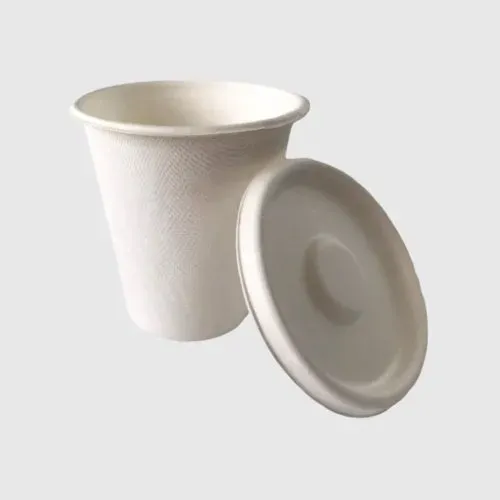
Bagasse cups, cup holders & sauce pots
Sugarcane bagasse cups (8 and 12 fl oz), 4 fl oz sauce pots with lids and 2- or 4-cup pulp carriers.
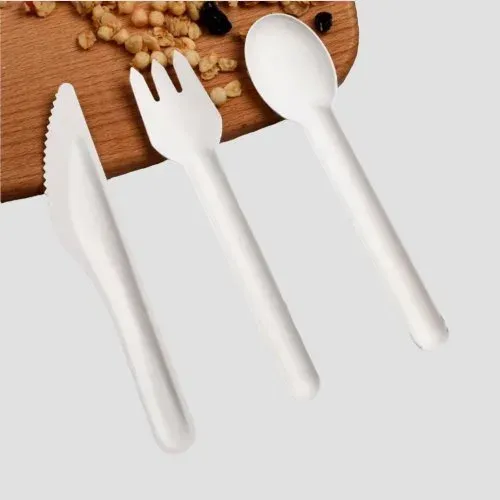
Disposable bagasse cutlery
Sugarcane bagasse fork, knife and soup spoon in two set formats. Heat resistant to 100°C, microwave-safe.
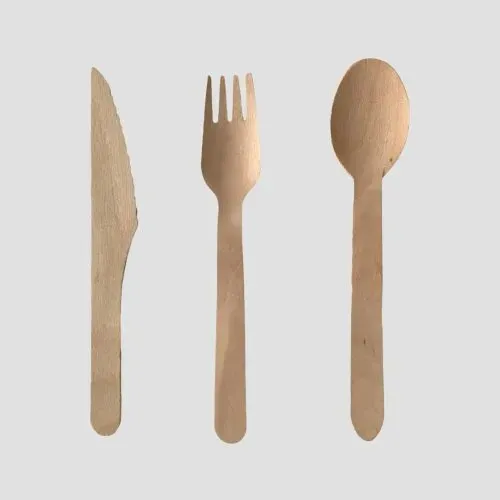
Disposable wooden cutlery
Solid birch fork, knife and spoons, sold loose or as a kraft-pouch set with napkin. Custom printed pouch.

Disposable bamboo cutlery
Natural bamboo fork, knife, spoon and teaspoon, sold as sets in a kraft pouch or individually.
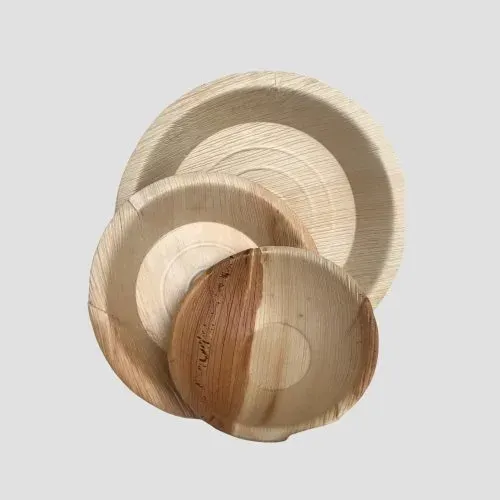
Palm & grape leaf plates
Areca palm leaf plates, bowls and trays plus grape leaf plates, round or square, 70 to 300 mm. Hot and cold food.
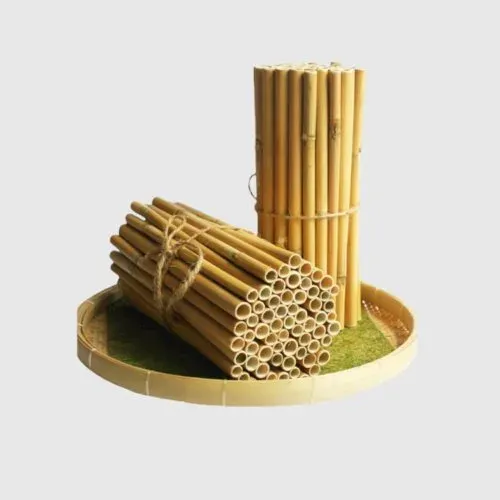
Rice, reed & bamboo straws
Natural straws for soft drinks, smoothies and bubble tea, 150 to 200 mm long, in bamboo, reed or rice.
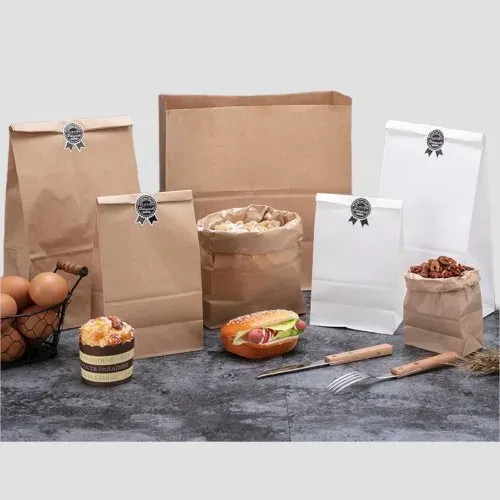
Kraft lunch bags & sandwich wrap
Food-grade recycled kraft lunch bags and pouches, with or without handles, plus cellulose sandwich wrap.
What counts as plastic-free food packaging?
A container is plastic-free only if neither the material nor its grease or water barrier contains plastic. That excludes the hidden films found in most paper cups and bowls.
- Plastic-free: molded bagasse, wood, bamboo, palm leaf, uncoated kraft, and paperboard with an aqueous barrier.
- Paper-based, not plastic-free: kraft or paperboard laminated with PE (polyethylene) or PLA (a plant-based plastic).
- Plastic: PET lids and windows, PP and rPET containers, even when recycled or reusable.
Under the FTC Green Guides, a "plastic-free" claim must be true for the whole item, lid and window included. A bagasse bowl with a PET lid is a plastic-free bowl, not a plastic-free set.
Plastic-free materials compared
Direct Eco Green produces each of these materials in partner factories; the right choice depends on the food, temperature and end of life available to your customers.
| Material | Barrier | Best for | End of life (qualified) |
|---|---|---|---|
| Sugarcane bagasse | Molded fiber itself | Hot meals, bowls, plates, trays, cups, sauce pots | Commercially compostable where industrial facilities accept it |
| Aqueous-coated board (GreenCup) | Water-based dispersion, no PE or PLA | Hot and cold drinks | Recyclable where facilities accept paper cups |
| Uncoated kraft and cellulose wrap | None, or paper density | Sandwiches, bakery, dry food bags | Recyclable where facilities exist |
| Birch wood, bamboo | Natural material | Cutlery, stirrers, serving pieces | Depends on local collection; check locally |
| Palm and grape leaf | Natural leaf | Plates, bowls, catering trays | Commercially compostable where facilities accept it |
| Rice, reed, bamboo straws | Natural material | Drinking straws | Depends on local collection |
Canada's single-use plastics ban and what it covers
Direct Eco Green builds its Canadian offer around fiber, wood and bamboo because these materials sit outside Canada's Single-use Plastics Prohibition Regulations (SOR/2022-138). The regulations ban checkout bags, cutlery, stir sticks, straws, ring carriers and foodservice ware made from problematic plastics: expanded polystyrene, PVC, oxo-degradable plastic and black plastic made with carbon black. Manufacture and import bans began on December 20, 2022 and sale bans on December 20, 2023. On January 30, 2026 the Federal Court of Appeal upheld the underlying "toxic" listing, so the rules remain in force.
Note that the ban is narrower than "all plastic": a clear PET lid is not banned, but plastic cutlery and straws are. Plastic-free cutlery and straws are therefore the simplest route for Canada.
Plastic-free and PFAS-free: two separate checks
Removing plastic does not automatically remove PFAS, because fluorinated chemicals were historically used to grease-proof fiber. Intentionally added PFAS are now banned in food packaging in New York, California, Washington, Vermont, Colorado, Connecticut, Maryland, Minnesota, Rhode Island and Hawaii, and in February 2024 the FDA announced that PFAS grease-proofing substances are no longer sold for food-contact use in the US. On Direct Eco Green molded fiber and aqueous-coated board, the grease barrier comes from the molded fiber itself or the aqueous coating, not from fluorinated treatments; ask for the factory's PFAS declaration with your quote.
How to write honest plastic-free and compostable claims
- Say what the item is made of: "made from renewable sugarcane fiber", "plastic-free cup with an aqueous barrier".
- Qualify end of life: "commercially compostable where industrial composting facilities accept it"; composting access varies by city.
- Back a compostable claim with ASTM D6400 or ASTM D6868 certification, usually through BPI, or CAN/BNQ 0017-088 in Canada. Tell Direct Eco Green which certification your market requires and it confirms, before you order, which factory reference can document it.
- In California, SB 343 limits "recyclable" claims and the chasing-arrows symbol to materials that meet state criteria.
- Avoid unqualified "biodegradable" or "eco-safe".
Sourcing plastic-free packaging factory-direct
Direct Eco Green manufactures plastic-free packaging through audited factories in Asia and Europe and consolidates bagasse, wood, bamboo and paper items into one shipment. Known MOQs include 10,000 pieces for bagasse plates, trays and bowls and 50,000 pieces for GreenCup cups; for other items the MOQ depends on material, size and printing and is stated in your quote. Paper and board items can carry FSC Mix or FSC Recycled labels under license C204557. See the full single-use tableware range or request samples.
Frequently asked questions
Are kraft paper bowls plastic-free?
Most kraft paper bowls are not plastic-free because they carry a PE or PLA lining against grease and liquids. Direct Eco Green offers molded bagasse bowls when a fully plastic-free bowl is required.
Is PLA-lined packaging plastic-free?
No. PLA is a plant-based plastic, so PLA-lined kraft is paper-based but not plastic-free. PLA-lined paper is also not curbside recyclable in most US programs.
What is the GreenCup plastic-free cup?
GreenCup is Direct Eco Green's paperboard cup with a water-based aqueous barrier instead of a PE or PLA film, for hot and cold drinks. The minimum order is 50,000 pieces.
Which plastic-free products comply with Canada's single-use plastics ban?
Fiber, wood, bamboo and bagasse cutlery, straws and containers are outside Canada's Single-use Plastics Prohibition Regulations. Direct Eco Green supplies bagasse, birch wood and bamboo cutlery and rice, reed and bamboo straws for this reason.
Is plastic-free bagasse packaging BPI certified?
Certification depends on the specific factory reference. Tell Direct Eco Green whether you need BPI, ASTM D6400, ASTM D6868 or CAN/BNQ 0017-088, and it confirms before you order which reference can document it.

About Direct Eco Green
Direct Eco Green is a manufacturer and sourcing partner of eco-friendly packaging, founded and based in Ho Chi Minh City, Vietnam, with a sister company in Singapore. It produces food packaging, luxury packaging, reusable bags and sustainable accessories in selected, audited partner factories in Vietnam, China, India, Turkey, Bulgaria and Spain, runs quality control on site, and ships consolidated orders to brands, restaurants and retailers in the US, Canada and Europe. Direct Eco Green holds FSC certification under license code C204557.
More wholesale guides: Wholesale food packaging · Custom printed packaging · Kraft packaging · Disposable packaging · Low-cost packaging (TCO) · Fast food & QSR · Pizza boxes · Catering · Bakery · Pastry boxes · Candy & chocolate · Butcher & meat
Get a factory-direct quote
Tell us which products you need, your quantities and your delivery city in the US or Canada. Direct Eco Green replies with a tailored quote within 48 hours, with samples available before production.
- By phone+84 77 3984 694
- WhatsApp+33 6 95 51 80 53
- By emailcontact@directecogreen.com