Key takeaways
- PLA is a bio-based plastic, not a natural fiber: it behaves like a plastic in use and needs commercial composting to break down.
- Certified compostable PLA items meet ASTM D6400 (plastics) or ASTM D6868 (coatings on paper), typically through BPI, or CAN/BNQ 0017-088 in Canada.
- Standard PLA softens at around 55 to 65 °C, so it is used for cold items or as a thin lining on paper rather than as the body of hot containers.
- Direct Eco Green, a factory-direct manufacturer of eco-friendly packaging, uses PLA mainly as a lining on kraft cups, bowls and take-out boxes, and confirms the certification each market requires before you order.
How PLA is made
PLA starts with starch or sugar from plants such as corn, sugarcane or cassava. The sugars are fermented into lactic acid, which is then converted and polymerized into polylactic acid resin. That resin is processed like other thermoplastics: extruded into film to line paper, thermoformed into cups and lids, or injection-molded into cutlery.
Being made from plants does not make PLA a natural material. It is a polyester plastic, identified by resin code 7 ("other"), and in use it behaves like one: clear, rigid, moisture-resistant. What distinguishes it is its end of life under specific composting conditions, which is also where most of the confusion begins.
Where PLA is used in food packaging
Direct Eco Green uses PLA mostly where a paper item needs a liquid or grease barrier. The main uses in foodservice:
| Use | Form of PLA | Direct Eco Green example |
|---|---|---|
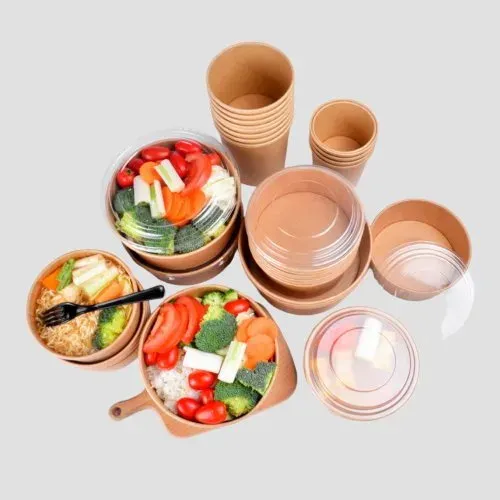
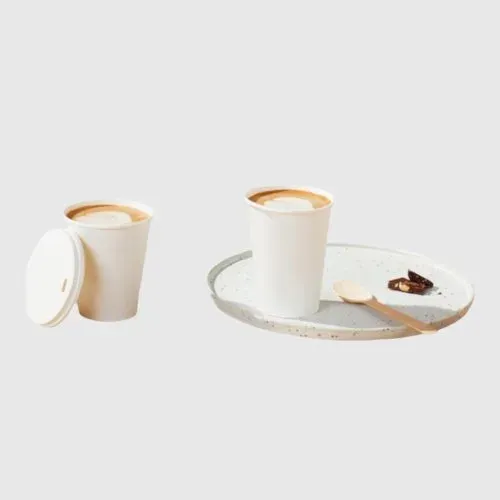
| Liquid and grease barrier on paper | Thin PLA film laminated inside the board | Kraft + PLA cups, kraft salad bowls |
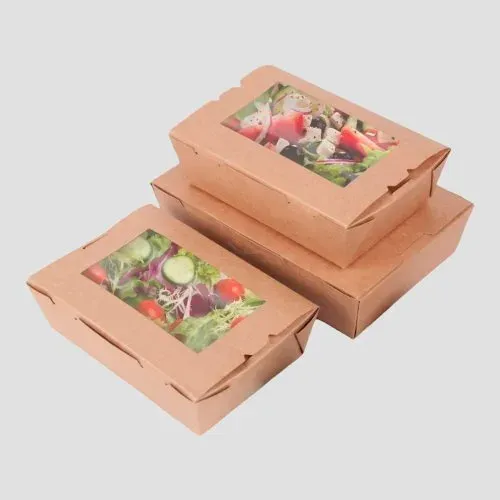
| Take-out boxes for oily or wet food | PLA lining on kraft board | Pasta and noodle boxes, fry and wrap packaging |
| Windows and clear lids | Transparent PLA film or thermoformed sheet | Salad and catering boxes (window options confirmed per reference) |
| Cold cups and deli containers | Thermoformed PLA | On request |
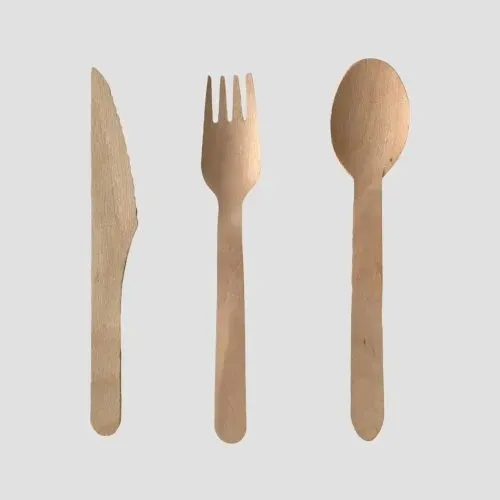
| Cutlery and hot-fill lids | CPLA (crystallized PLA, more heat-resistant) | On request |
As a lining, PLA does the job a PE film does on conventional paper packaging, without fluorinated (PFAS) treatments. Ask for the factory's PFAS declaration in any case; BPI certification requires total organic fluorine of 100 ppm or less.
Compostable: under what conditions
PLA breaks down through hydrolysis, which is only fast enough at high temperature and moisture, followed by microbial digestion. That is why certification standards test it in commercial composting conditions. Under ASTM D6400, a compostable plastic must disintegrate (at least 90% into fragments under 2 mm within 12 weeks), biodegrade (at least 90% conversion to CO2 within 180 days at about 58 °C), and leave no toxic residue for plants. PLA coatings on paper are tested under ASTM D6868; in Canada the reference is CAN/BNQ 0017-088.
Outside those conditions, PLA lasts. In a backyard compost pile, hydrolysis is very slow; in a landfill without oxygen it barely degrades; in cold seawater it can persist for years. A PLA item is therefore compostable only if two things are true: the exact item is certified, and the customer's waste actually reaches a commercial composting facility that accepts packaging. Our guide to compostable packaging for caterers and events explains how to check the second point.
Why PLA is not curbside recyclable
PLA is technically recyclable, but municipal recycling facilities generally do not accept it, and it should not be mixed with PET (#1): clear PLA cups look like PET cups, and when they end up in the PET stream they contaminate the recycled material. PLA-lined paper is also not accepted in most US paper recycling programs, because the lining does not separate the way mills expect.
The practical rule: design PLA items for the compost route, and do not print a recyclable claim or the chasing-arrows symbol on them. In California, SB 343 has limited recyclable claims to materials meeting state criteria since October 4, 2026. If recyclability matters more than compostability for your customers, compare PLA linings with aqueous-coated alternatives in our guide to PE, PLA and aqueous-coated paper cups.
Heat, strength and other practical limits
Most complaints about PLA packaging come from using it outside its range. Check these limits before choosing a PLA item.
- Heat. Standard PLA softens at roughly 55 to 65 °C (130 to 150 °F). Clear PLA cups are for cold drinks; PLA works for hot drinks only as a thin lining on paperboard, where the board carries the structure. CPLA cutlery and lids are crystallized to tolerate higher temperatures.
- Storage. Keep PLA items away from heat in warehouses and vehicles; a hot trailer can deform thin PLA lids and cups.
- Strength. PLA is rigid and strong, close to PET in tensile strength, but more brittle on impact.
- Microwave. PLA-lined items should not be used to reheat food unless the factory specifically rates them for it.
US and Canadian rules that affect PLA
| Rule | What it means for PLA packaging |
|---|---|
| FTC Green Guides | "Compostable" must be substantiated and qualified where composting facilities are not available to most consumers; unqualified "biodegradable" is not supportable for PLA |
| California AB 1201 | Products labeled compostable must meet ASTM-based testing; the requirement to also be allowed under the USDA National Organic Program is delayed to June 30, 2027 |
| California SB 343 | No recyclable claim or chasing arrows on items that do not meet state recyclability criteria |
| Canada Single-use Plastics Prohibition Regulations | The bans on single-use plastic cutlery and straws apply to conventional and non-conventional plastics, so PLA and CPLA cutlery and straws are covered; PLA-lined paper cups and boxes are not targeted |
For Canada, that last point matters: wood, bamboo, bagasse or paper alternatives are the safe choice for single-use cutlery and straws. See our 2026 checklist of packaging rules for restaurants.
When to choose PLA, and when not to
| Choose PLA when | Choose something else when |
|---|---|
| Your venue or city collects food scraps and certified packaging for commercial composting | Most of your packaging ends up in curbside recycling or landfill |
| A local ordinance requires certified compostable take-out ware | You sell cutlery or straws in Canada |
| You need a clear, rigid cold cup or window and want a compostable route | The item must hold hot food in a plastic body or go in the microwave |
| You need a liquid or grease barrier on paper without fluorinated chemistry | You want a recyclable claim on paper packaging |
For hot, greasy food, molded fiber is often the better compostable option; see what is bagasse. For several items, Direct Eco Green can quote more than one barrier (for example PLA, PE or an aqueous coating) so you can choose by end-of-life route. Send your list through the quote form and tell us which certification your market requires.
Frequently asked questions
What is PLA made from?
PLA (polylactic acid) is made from plant sugars, usually from corn, sugarcane or cassava. The sugars are fermented into lactic acid, which is polymerized into a plastic resin that can be made into films, cups, lids and cutlery.
Is PLA biodegradable?
PLA biodegrades in commercial composting conditions, at about 58 °C with high moisture, when the item is certified to ASTM D6400 or D6868. In home compost, landfills, soil or the ocean it breaks down very slowly, so an unqualified biodegradable claim is not supportable under the FTC Green Guides.
Can PLA go in the recycling bin?
No, in most US communities. Municipal recycling facilities generally do not accept PLA, and clear PLA cups can contaminate PET recycling if they are mistaken for PET. PLA-lined paper is also not accepted in most paper recycling programs.
Is PLA safe for hot drinks?
Standard PLA softens at about 55 to 65 °C, so clear PLA cups are for cold drinks. For hot drinks, PLA is used as a thin lining inside a paperboard cup, where the board provides the structure; crystallized PLA (CPLA) is used for cutlery and lids that need more heat resistance.
Is PLA cutlery allowed in Canada?
No for single-use cutlery. Environment and Climate Change Canada has said the Single-use Plastics Prohibition Regulations apply equally to conventional and non-conventional plastics, so compostable PLA and CPLA cutlery and straws are covered. Wood, bamboo or bagasse cutlery are alternatives.
Sources
- Infinita Lab: Is PLA biodegradable and compostable? Testing and standards
- CBC: Federal plastics ban and compostable alternatives (ECCC statement)
- National Law Review: California delays NOP requirements for compostable products
- BPI: Fluorinated chemicals policy
- FTC: Environmental claims, summary of the Green Guides