Key takeaways
- Verify, do not just collect: FSC certificates can be checked on info.fsc.org and BPI-certified products in BPI's public listing.
- For food packaging sold in the US, ask for a food-contact compliance letter and a PFAS test report; several state PFAS laws ban intentionally added PFAS in food packaging.
- Approve pre-production samples and book a pre-shipment inspection before final payment.
- Direct Eco Green answers audit requests with a quote within 48 hours, samples before production and an FSC license (C204557) you can check online.
Why an overseas packaging supplier needs a documented audit
An audit tells you who actually makes your packaging and whether the environmental and food-safety claims printed on it can be proven. Without it, you carry the risk of a claim you cannot substantiate under the FTC Green Guides or a state PFAS law.
Many "eco-friendly" catalogs are assembled from several factories. A trading company can be a good partner, but it should name the factory behind each item and pass on that factory's documents. The checklist works for manufacturers, sourcing partners and distributors alike.
The 12-point checklist at a glance
Direct Eco Green selects and audits its own partner factories, and the table below lists the 12 points a buyer should check with any supplier, including us: what to request, how to verify it and the warning signs.
| # | What to ask for | How to verify | Red flag |
|---|---|---|---|
| 1 | Business license and legal entity | Name and address match invoices and bank details | Different company names on each document |
| 2 | Factory identity (manufacturer vs distributor) | Factory name and address per item; video or on-site visit | "Our factory" with no address |
| 3 | FSC certificate | License code checked on info.fsc.org; scope and status | Logo used without a license code |
| 4 | Compostable certification | Product found in BPI's listing; ASTM D6400 / D6868; CAN/BNQ 0017-088 for Canada | "Compostable" with only an internal test |
| 5 | Food-contact compliance letter | References US FDA regulations (21 CFR) for the actual materials | Generic letter not naming the product |
| 6 | PFAS test report | Total organic fluorine result from an independent lab, plus a no-intentional-addition statement | Declaration only, no lab report |
| 7 | Recycled-content evidence | GRS or RCS certificate; FDA No Objection Letter for food-contact rPET | A recycled percentage with no certificate |
| 8 | Social audit | Recent report from a recognized scheme (e.g., SMETA, BSCI) | Refuses any social audit |
| 9 | Claims and artwork review | Claims qualified per FTC Green Guides and California SB 343 | Unqualified "biodegradable" on artwork |
| 10 | Samples | Pre-production sample approved and kept as reference | No sample before mass production |
| 11 | Pre-shipment inspection | Inspection against your approved sample and specs | Inspection refused |
| 12 | Incoterms and quote terms | Incoterm, MOQ, payment and responsibilities in writing | Price with no Incoterm |
Points 1 to 3: legal entity, factory identity and FSC certificate
Start with identity: confirm the company exists, that you know which factory produces each item, and that any FSC claim is backed by a valid license you have checked yourself.
1. Business license and legal entity
Ask for the business registration of the entity that will invoice you; its name and address should match the quote, contract and bank account. Direct Eco Green, for example, invoices through Cong Ty TNHH Direct Eco Green Co. Ltd in Ho Chi Minh City, Vietnam, or Direct Eco Green Pte. Ltd in Singapore.
2. Manufacturer vs distributor
Ask which factory makes each item and in which country. A video call on the production floor, a visit or a third-party factory audit confirms it. ISO 9001 or ISO 14001 certificates, where they exist, signal documented processes.
3. FSC certificate
For paper and board, ask for the FSC license code and check it on info.fsc.org. Look at the certificate holder's name, its status and its scope: the product type you buy should be covered. Direct Eco Green's FSC license code is C204557, with FSC Mix and FSC Recycled labels available on paper and board products.
Points 4 to 7: compostability, food contact, PFAS and recycled content
For food packaging, these four documents carry most of the regulatory risk: each one must name the exact material and, ideally, the exact product reference.
4. Compostable certification (BPI / ASTM D6400 / ASTM D6868)
If you plan to print "compostable," US buyers expect certification to ASTM D6400 (compostable plastics) or ASTM D6868 (compostable coatings on paper or fiber), typically through BPI; Canada uses CAN/BNQ 0017-088. Search BPI's public product listing for the certificate holder and the exact product. A certificate for a different item from the same factory does not cover yours.
5. Food-contact compliance letter
Ask for a letter stating that the materials in contact with food comply with the applicable FDA regulations under 21 CFR, or are covered by a Food Contact Notification, for the intended use (hot, cold, fatty foods). In Canada, Health Canada's Letter of No Objection program for packaging materials is voluntary, so ask whether one exists rather than assuming it.
6. PFAS test report
Intentionally added PFAS are banned in food packaging by state laws in New York, California, Washington, Vermont, Colorado, Connecticut, Maryland, Minnesota, Rhode Island and Hawaii. Ask for a lab report on total organic fluorine and a statement that no PFAS are intentionally added. BPI's own rule is a useful benchmark: certified products need a BPI-approved lab test showing 100 ppm total organic fluorine or less. Ask what provides the grease barrier: molded fiber, PE or PLA film, or an aqueous coating. See our guide to state PFAS laws.
7. Recycled-content evidence
A recycled-content claim needs a chain-of-custody certificate such as GRS (Global Recycled Standard) or RCS. For food-contact recycled plastic such as rPET, ask whether the recycling process is covered by an FDA No Objection Letter. Our rPET guide explains why.
Points 8 and 9: social audit and environmental claims
A social audit shows how the factory treats its workers, and an artwork review makes sure the claims printed on your packaging are ones you can defend.
8. Social audit
Ask for a recent report from a recognized scheme such as SMETA (Sedex) or amfori BSCI, and read the findings and corrective actions, not just the cover page.
9. Claims and artwork review
Review every claim on the artwork before printing. Under the FTC Green Guides, "compostable" must be qualified where composting facilities are not available to a substantial majority of consumers, and unqualified "biodegradable" claims are generally not supportable for items that end up in landfill. In California, SB 343 restricts the chasing-arrows symbol and "recyclable" claims from October 4, 2026 to materials that meet state recyclability criteria. More detail in recyclable vs compostable claims.
Points 10 to 12: samples, inspection and Incoterms
The last three points protect the order itself: approve a sample, inspect production against it, and put responsibilities in writing.
10. Samples
Test pre-production samples in real use (hot and greasy food, stacking, lids, print) and keep one approved sample as the inspection reference.
11. Pre-shipment inspection
Before final payment, have your team or a third-party inspector check quantity, dimensions, print, packing and defects against the approved sample.
12. Incoterms and quote terms
Ask for the Incoterm (EXW, FOB, CIF or DDP) on every quote. It defines who pays freight, insurance and duties, and who carries the risk. Confirm the MOQ, payment terms and who acts as importer of record; have a licensed customs broker confirm the classification and duty.
How Direct Eco Green handles a buyer's audit
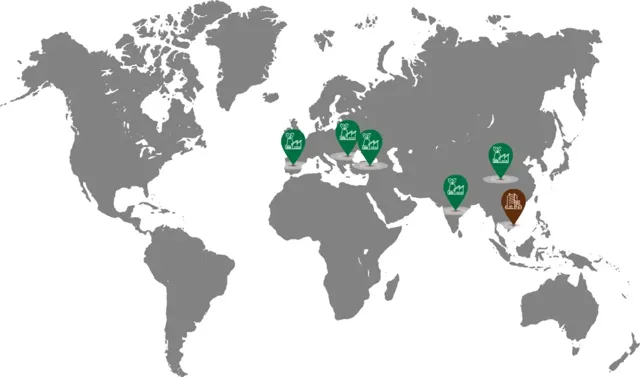
Direct Eco Green, a factory-direct manufacturer of eco-friendly packaging, works through selected and audited partner factories in Vietnam, China, India, Turkey, Bulgaria and Spain, and supports buyers with the regulatory documents each reference needs. You can use this checklist with us as with any other supplier.
- A tailored quote within 48 hours, stating the MOQ for each item.
- Samples before mass production, and on-site quality control close to the factories in Vietnam.
- FSC license C204557, which you can check on info.fsc.org.
- Compostable certification: tell us which certification your market requires and we confirm, before you order, which factory reference can document it.
- PFAS: we request the factory's PFAS declaration with your quote and tell you what provides the grease barrier.
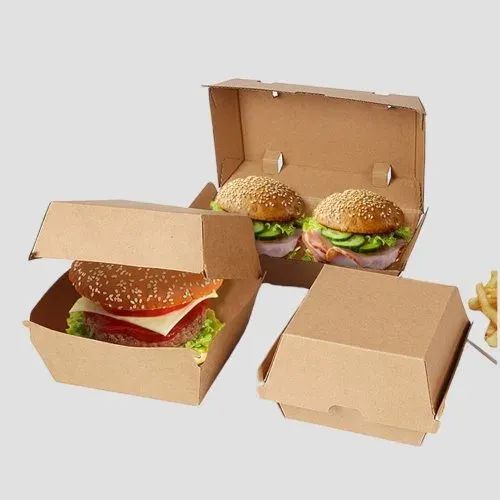
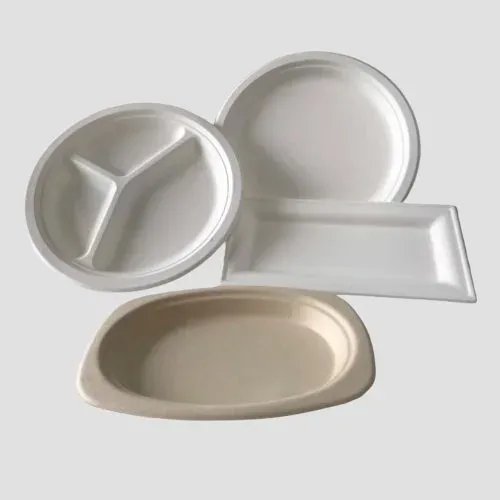
Browse the catalog, for example bagasse plates and trays or kraft burger boxes, then send your audit list through the contact form.
Frequently asked questions
How do I check if a packaging supplier's FSC certificate is valid?
Search the license code on info.fsc.org, the public FSC certificate database, and check the holder's name, the status and the scope of products covered. The name should match the company or factory invoicing you. Direct Eco Green's FSC license code, C204557, can be checked this way.
How do I verify that compostable packaging is BPI certified?
Search BPI's public product listing for the certificate holder and the exact product name or reference. A BPI certificate covers specific products, so a certificate for another item from the same factory does not cover the packaging you are buying. For Canada, also ask about CAN/BNQ 0017-088.
What documents should a food packaging manufacturer provide for the US market?
A food packaging manufacturer should provide a food-contact compliance letter referencing FDA regulations under 21 CFR, a PFAS test report with a no-intentional-addition statement, and certificates for any claim you plan to print, such as FSC or BPI. Each document should name the material and, ideally, the product reference.
Is a PFAS declaration enough, or do I need a test report?
A PFAS declaration is a start, but a lab report on total organic fluorine gives you evidence you can show to customers and regulators. BPI, for example, requires a BPI-approved lab test showing 100 ppm total organic fluorine or less plus a no-intentional-addition statement for certified products.
Should I work with a manufacturer or a distributor for eco-friendly packaging?
A distributor is often better for small quantities of stock items delivered quickly. A manufacturer or factory-direct sourcing partner is usually better for custom printed, private label or high-volume orders, because you control specifications, documents and unit cost at volume. In both cases, ask which factory makes each item.
Sources
- BPI: Fluorinated chemicals policy for certified compostable products
- FDA: PFAS used as grease-proofing agents in food packaging no longer being sold in the US
- PFAS in food packaging: state compliance guide
- FTC: Environmental claims, summary of the Green Guides
- California SB 343 restrictions effective October 4, 2026