Key takeaways
- As of October 2026, the IEEPA "reciprocal" tariffs are gone (struck down by the US Supreme Court on February 20, 2026) and Section 301 forced-labor tariffs of 10% or 12.5% apply to imports from 60 economies since July 24, 2026.
- China remains subject to its separate, older Section 301 duties on top of the new action, which is why many buyers look at other countries for packaging.
- Tariff rates depend on the country, the product classification and ongoing litigation: confirm the HTS code and duty rate with a licensed customs broker for each item.
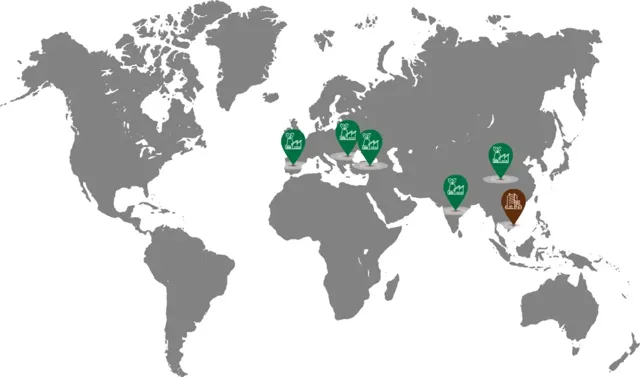
- Direct Eco Green manufactures through audited partner factories in Vietnam, China, India, Turkey, Bulgaria and Spain and can consolidate several factories into one order.
Where US tariffs on imported packaging stand as of October 2026
As of October 2026, the main additional US tariff on imported packaging is the Section 301 forced-labor action that took effect on July 24, 2026, at 10% or 12.5% depending on the exporting country. It replaced a temporary surcharge, which itself replaced the IEEPA tariffs struck down earlier in the year.
| Date (2026) | Measure | Status as of October 2026 |
|---|---|---|
| February 20 | US Supreme Court invalidates tariffs imposed under IEEPA (the "reciprocal" tariffs) | No longer collected |
| February 24 | Temporary 10% surcharge under Section 122 of the Trade Act of 1974 | Expired July 24, 2026 (150-day limit) |
| July 24 | USTR Section 301 forced-labor tariffs of 10% or 12.5% on imports from 60 economies (about 99.4% of US imports) | In force; litigation ongoing |
| Ongoing | Older Section 301 duties on goods from China | Still apply, on top of the new action |
The rate under the new action depends on whether the exporting country committed to a ban on imports produced with forced labor. Goods covered by Section 232 are excluded from that action. We deliberately do not list which tier each country falls in: tiers, exclusions and court decisions can change, and the rate that applies to your shipment also depends on the exact classification of each product.
Our recommendation: before each purchase order, give a licensed customs broker the description, material, origin and use of each item and ask for the HTS classification and the full duty stack.
Canada applies its own tariff regime: goods that qualify as North American under CUSMA have their own treatment, and goods from other origins are generally assessed at MFN rates. A Canadian customs broker is the right source for the rate on your specific items.
Why buyers still diversify packaging sourcing beyond China
Buyers diversify beyond China mainly to reduce dependence on one supply base, to manage the extra China-specific Section 301 duties, and to reach materials and processes that other countries handle well. Tariffs are one input; supply continuity is the bigger one.
China still has the deepest packaging ecosystem and remains a sensible choice for many items. The risk is concentration: when every SKU comes from one country, a change in duties, freight or inspection rules hits the whole range at once.
Spreading references across two or three countries keeps a second source qualified and lets you move volume if one route becomes more expensive. The cost is coordination: more suppliers to audit, more samples, more shipments.
The forced-labor framing of the 2026 action is also a reminder to know how your packaging is made, which is why vetting each factory matters as much as the rate.
Vietnam, India, Turkey and Europe compared on capabilities
Direct Eco Green, a factory-direct manufacturer of eco-friendly packaging, routes each reference to the partner factory best suited to its material and process, in Vietnam, China, India, Turkey, Bulgaria or Spain. The comparison below is qualitative and describes where buyers typically look first; the factory for your item is confirmed in your quote.
| Sourcing country | Typical strengths for eco-friendly packaging | What to verify |
|---|---|---|
| Vietnam | Kraft paper and paperboard packaging, plant-fiber and molded-fiber products, bamboo and wood items; a growing base for medium runs and custom formats | Food-contact and PFAS documents, FSC chain of custody for paper items, consistency between samples and mass production |
| China | Broadest range of materials, machinery and finishing; very large standardized runs; complex printed and rigid boxes | The extra China-specific Section 301 duties, social audits, traceability of materials |
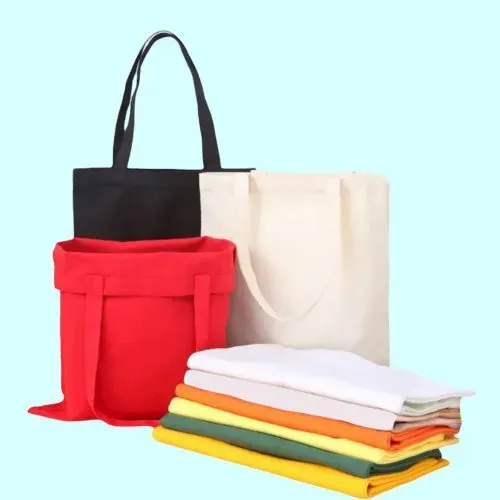
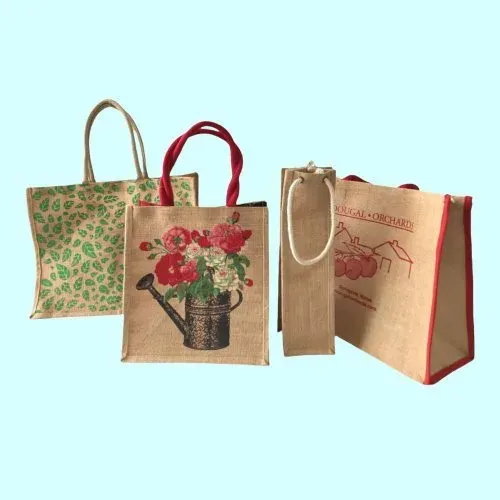
| India | Natural fibers such as jute and cotton for bags; textile printing and sewing | Recycled or organic content certificates where claimed, color and print consistency |
| Turkey | Textiles and cotton bags; a production base between Asia and Europe | Fabric weight and finishing specs, social audit, transit routing to North America |
| Europe (Bulgaria, Spain) | Paper and board converting for programs that need European production or documentation | Unit cost and transit to North America compared with Asian origins; duty treatment for US or Canadian import |
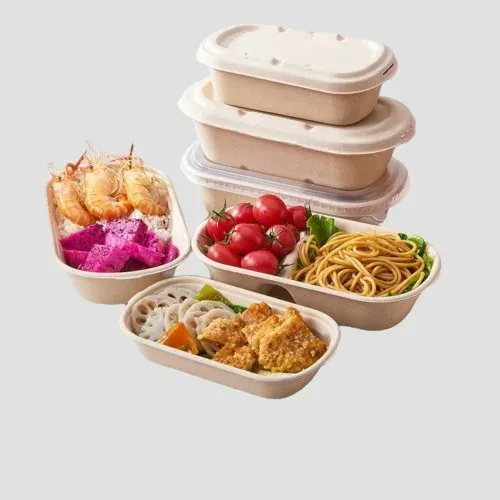
This is not a ranking: a bagasse bowl, a jute tote and a rigid gift box are different industries. Start from the material, then shortlist factories.
How to compare countries on total landed cost, not unit price
Compare origins on total landed cost: unit price plus freight, duties and fees, inspection, and the cost of a rejected or late shipment. A lower ex-works price can lose its advantage once duties and logistics are added.
- Unit price at your real volume. Quote the same specification, quantity and printing in each country.
- Duties. Have your customs broker confirm the HTS code and current duty stack per origin, including any China-specific duties.
- Freight and consolidation. Several small shipments from different countries cost more than consolidated shipments; plan which items can travel together.
- Incoterms. FOB, CIF and DDP shift who pays and who carries the risk at each stage; compare quotes on the same Incoterm.
- Quality and documents. Samples, pre-shipment inspection, food-contact letters and PFAS declarations cost less than a rejected container.
For high-volume orders of standard items, a single origin may still win. See our guide to packaging MOQs for the volume side of the equation.
How Direct Eco Green manages multi-country sourcing for US and Canadian buyers
Direct Eco Green is a manufacturer and sourcing partner, not a distributor: it has been based in Ho Chi Minh City, Vietnam, for more than seven years and produces through selected and audited partner factories in Asia and Europe. Buyers send one set of specifications and get one point of contact, whichever factory makes each item.
- Factory selection by material: each reference goes to a partner factory with the right process, in Vietnam, China, India, Turkey, Bulgaria or Spain.
- On-site quality control close to the factories in Vietnam, plus samples before mass production.
- Multi-factory consolidation: items from several factories can be combined into one order.
- Regulatory documentation support: food-contact, PFAS and certification documents are requested per reference; paper and board items can carry FSC labels under license code C204557.
- Custom printing and private label on most product families.
- Tailored quote within 48 hours, stating MOQ and the factory country for each item.
Direct Eco Green is not a customs broker: we give you the product details your broker needs to classify each item.
A step-by-step plan to move part of your range out of China
Move one product family at a time, starting with items where another country has a clear capability advantage, and keep your current supplier qualified until the new one has shipped successfully.
- Map your range by material, volume and current origin.
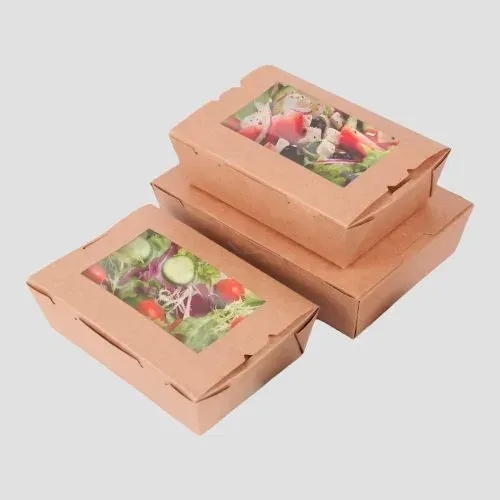
- Pick a pilot, for example bagasse bowls and containers or kraft salad and catering boxes.
- Get HTS classification and duty from a licensed customs broker for each candidate origin.
- Request quotes on identical specs and audit the factory and its documents.
- Approve pre-production samples and keep a reference sample.
- Inspect before shipment, compare the landed cost with your forecast, then scale.
To start, browse the catalog or send your list of items through the contact form.
Frequently asked questions
What tariffs apply to packaging imported into the US as of October 2026?
As of October 2026, Section 301 forced-labor tariffs of 10% or 12.5% apply to imports from 60 economies since July 24, 2026, and goods from China also carry older Section 301 duties. The IEEPA reciprocal tariffs were invalidated by the US Supreme Court on February 20, 2026, and the temporary Section 122 surcharge expired on July 24, 2026. Confirm the HTS code and duty for each packaging item with a licensed customs broker.
Is Vietnam a good alternative to China for eco-friendly packaging?
Vietnam is a strong option for kraft paper packaging, molded-fiber products such as bagasse, and bamboo and wood items, especially for medium runs and custom formats. China still offers the broadest ecosystem and very large standardized runs but carries extra China-specific Section 301 duties. The right choice depends on the material, volume and documents you need for each item.
Which tariff tier is Vietnam, India or Turkey in?
Direct Eco Green does not publish country tiers for the 2026 Section 301 forced-labor tariffs, because the 10% or 12.5% rate depends on each country's commitments and the action is still being litigated. A licensed customs broker can confirm the rate that applies to your origin and HTS code on the date you import.
Does moving production out of China remove US tariffs on packaging?
No. Moving production out of China removes the China-specific Section 301 duties, but as of October 2026 most other origins are subject to the Section 301 forced-labor tariffs of 10% or 12.5%. Compare total landed cost per origin, including freight, duties and quality costs, before moving volume.
How does Direct Eco Green handle orders made in several countries?
Direct Eco Green produces each item in the partner factory best suited to it, in Vietnam, China, India, Turkey, Bulgaria or Spain, and can consolidate items from several factories into one order. Buyers get one quote within 48 hours and samples before production.
Do Canadian buyers face the same US tariffs?
No. Canada applies its own tariff regime: goods qualifying under CUSMA have their own treatment and other origins are generally assessed at MFN rates. A Canadian customs broker should confirm the classification and duty for each packaging item before you order.